
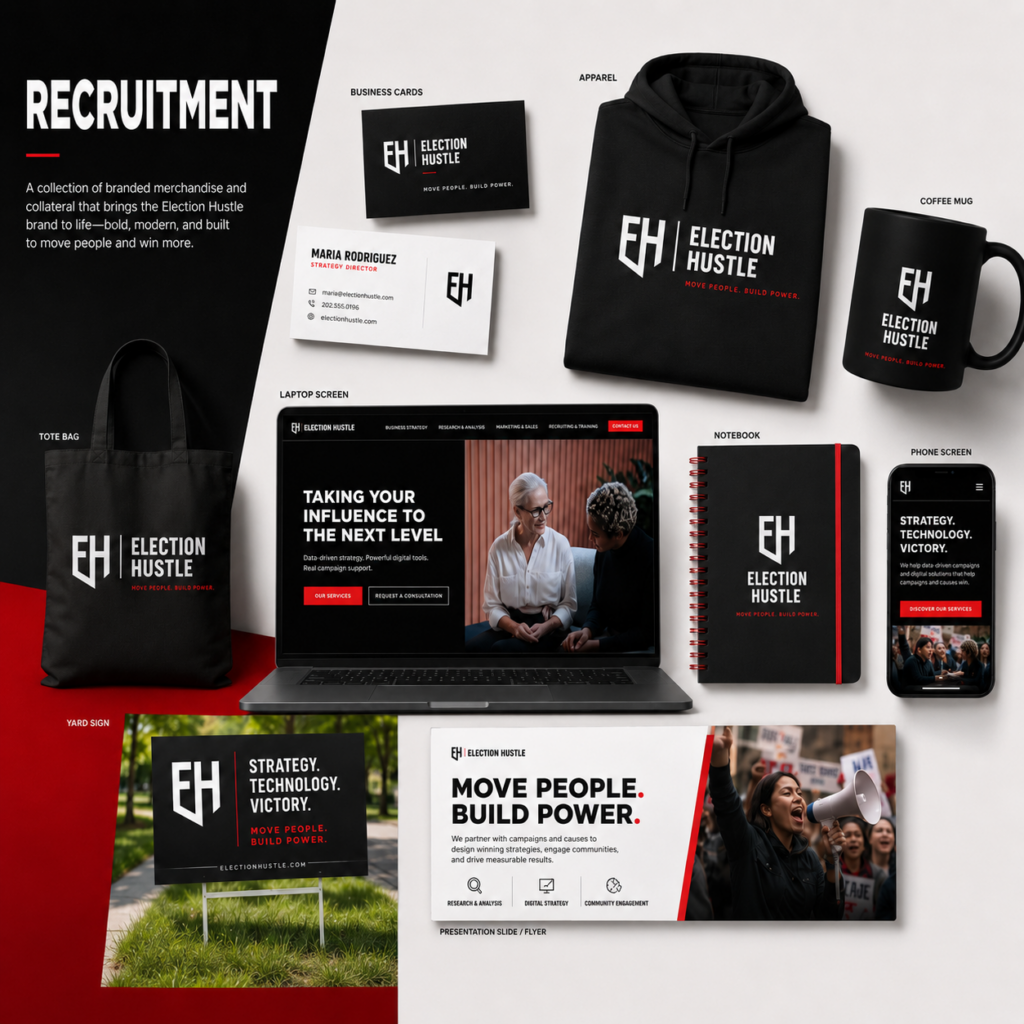
Recruiting New Employees in a Remote Work Environment: How Election Hustle Builds Mission-Driven Teams for Digital Impact
Introduction: Remote Recruiting Is More Than Filling a Position
Recruiting new employees in a remote work environment is not just about finding someone who can work from home. It is about finding people who can communicate clearly, manage responsibility without constant supervision, collaborate through digital tools, protect the mission, and help turn online attention into real-world impact.
For Election Hustle, remote recruiting matters because much of today’s community work happens online before it happens anywhere else.
A supporter may first discover a cause through a social media post.
A donor may first respond to an email campaign.
A customer may first buy from an e-commerce storefront.
A sponsor may first review a pitch deck.
A volunteer may first sign up through a digital form.
A community member may first ask a question in a comment section.
Behind every one of those moments is labor.
Someone writes the copy.
Someone designs the graphic.
Someone answers the message.
Someone builds the store.
Someone manages the data.
Someone follows up with donors.
Someone tracks engagement.
Someone prepares the pitch.
Someone organizes the team.
Remote employees make this work possible.
But hiring remotely requires discipline. It requires more than posting a job and hoping the right person appears. It requires clarity about the mission, the role, the tools, the expectations, the culture, the pay, and the kind of person who can thrive without being in the same physical room every day.
Election Hustle helps organizations turn meaningful social media interactions into fundraising, organizing, e-commerce, awareness, and staff support. That mission depends on people who can work with both heart and structure.
This article explains proven methods for recruiting new employees in a remote work environment, using the Election Hustle approach and the case-study examples of Chicago Southland Activities and Leaders and 3WF – Third Wave Feminism.
Both examples show why remote recruiting is not just an HR task. It is a growth strategy.
Why Remote Recruiting Matters for Community Organizations
Many community organizations start with passion before they have payroll. A founder posts updates. A volunteer makes graphics. A friend helps with captions. Someone’s cousin builds a website. A supporter runs the inbox. A trusted person helps with events. Everyone does what they can.
That can work for a season.
But as the work grows, informal labor becomes difficult to sustain. The organization needs people who can take ownership, manage systems, and deliver consistent results. It needs employees or contractors who understand that digital work is real work.
Remote recruiting allows organizations to find people beyond their immediate neighborhood, office, or local volunteer circle. It opens the door to designers, writers, organizers, fundraisers, administrative assistants, social media managers, data coordinators, e-commerce specialists, and project managers who can contribute from anywhere.
For Election Hustle, this is especially important because the work often sits at the intersection of:
Digital organizing
Fundraising
Social media strategy
Community awareness
E-commerce
Pitch deck creation
Volunteer coordination
Donor follow-up
Content production
Brand storytelling
Campaign operations
Staff sustainability
A strong remote hire can help a community organization become more consistent, more professional, and more fundable.
A weak remote hire can create confusion, missed deadlines, unclear communication, and lost opportunities.
That is why the recruiting process matters.
The Election Hustle Recruiting Philosophy
Election Hustle’s recruiting philosophy begins with one belief:
The right people help turn attention into action.
A remote employee should not only complete tasks. They should understand how their work connects to the larger mission.
A social media manager should understand that comments can become donor leads.
A designer should understand that a product mockup can help generate storefront revenue.
A writer should understand that a caption can move someone from awareness to participation.
A project manager should understand that deadlines affect fundraising.
A community engagement assistant should understand that every reply can build or weaken trust.
A development coordinator should understand that follow-up is part of care.
An e-commerce assistant should understand that products can carry a message and fund a mission.
Election Hustle recruits for skill, but also for alignment.
Skill answers: Can this person do the job?
Alignment answers: Does this person understand why the job matters?
A remote team needs both.
Case Study One: Recruiting for Chicago Southland Activities and Leaders
Chicago Southland Activities and Leaders is a strong example of a community platform that can benefit from remote employees. A platform like this may focus on local activities, events, leadership, family opportunities, small businesses, regional culture, and community visibility.
The work may seem simple from the outside. People may think, “They just post events.”
But behind the scenes, a serious community platform needs real labor.
Someone must collect event details.
Someone must verify dates and times.
Someone must organize submissions.
Someone must design content.
Someone must write captions.
Someone must schedule posts.
Someone must respond to messages.
Someone must build sponsor relationships.
Someone must track analytics.
Someone must manage an e-commerce storefront.
Someone must help turn community attention into revenue.
Remote recruiting for a platform like Chicago Southland Activities and Leaders should focus on people who are organized, locally curious, digitally skilled, and comfortable with community-facing communication.
Potential remote roles could include:
Community Content Coordinator
Social Media Scheduler
Local Partnerships Assistant
Sponsor Outreach Coordinator
Graphic Designer
E-Commerce Storefront Assistant
Community Engagement Specialist
Administrative Coordinator
Digital Advertising Assistant
Analytics and Reporting Assistant
Each role should connect to the platform’s sustainability. If the organization wants to raise money, support staff, and build awareness, it needs employees who understand that visibility has value.
A job description for Chicago Southland Activities and Leaders should not only say, “Manage social media.”
It should say:
“We are looking for a remote team member who can help turn local community engagement into organized visibility, sponsor opportunities, storefront growth, and stronger regional awareness.”
That language attracts a different kind of candidate. It tells applicants that the work is not random posting. It is digital community infrastructure.
Case Study Two: Recruiting for 3WF – Third Wave Feminism
3WF – Third Wave Feminism represents a cause-based digital community. Its work may involve feminist education, advocacy, awareness campaigns, storytelling, social media engagement, merchandise, fundraising, and community support.
Recruiting for a cause-based remote team requires care.
The organization needs people who are skilled, but also thoughtful. They may need to write about sensitive subjects, respond to community members with respect, understand movement language, support fundraising without exploiting pain, and help create products or campaigns that reflect the values of the organization.
Potential remote roles for 3WF could include:
Advocacy Content Writer
Digital Campaign Coordinator
Community Moderator
Fundraising Assistant
Merchandise and Storefront Coordinator
Social Media Designer
Educational Resource Coordinator
Partnerships Assistant
Volunteer Coordinator
Donor Communications Specialist
For 3WF, the best remote employees should understand that advocacy work is labor. They should also understand boundaries. A cause-based organization cannot build a healthy team if employees are expected to be constantly available, emotionally overextended, or underpaid because the work is mission-driven.
A strong job description for 3WF might say:
“We are seeking a remote team member who can help turn feminist education, digital engagement, and community storytelling into organized campaigns, fundraising support, e-commerce visibility, and sustainable impact.”
That sentence makes the role bigger than content production. It connects the employee to the purpose of the work.
Step One: Define the Role Before Posting the Job
Remote recruiting fails when the organization does not know what it is hiring for.
Before posting a job, define the role clearly.
Ask:
What problem will this person solve?
What work will they own?
What tasks will they repeat weekly?
What tools will they use?
Who will they report to?
What decisions can they make?
What does success look like after 30, 60, and 90 days?
How will this role support fundraising, awareness, e-commerce, organizing, or staff capacity?
A vague role creates vague applicants.
Instead of saying:
“We need help with social media.”
Say:
“We need a remote Social Media and Community Engagement Coordinator who can schedule weekly posts, respond to basic community messages, track meaningful interactions, identify sponsor leads, and help move supporters toward donations, storefront purchases, event participation, or volunteer sign-ups.”
That is much stronger.
It tells applicants what the job actually involves. It also helps the organization evaluate whether the candidate is prepared for the work.
Step Two: Write a Mission-Driven Job Description
A job description should do more than list tasks. It should tell the story of the organization and explain why the role matters.
For Election Hustle, a strong job description includes:
A short introduction to the organization.
A clear explanation of the mission.
A practical summary of the role.
A list of responsibilities.
A list of required skills.
A list of preferred skills.
Remote work expectations.
Tools the employee will use.
Compensation or pay range when possible.
Application instructions.
The values of the team.
The tone should be professional, clear, and human.
A strong opening might read:
“Election Hustle helps community organizations turn meaningful digital interaction into organized action, fundraising, e-commerce, awareness, and sustainable impact. We are hiring a remote team member who can help us build the systems behind that work.”
For Chicago Southland Activities and Leaders:
“Chicago Southland Activities and Leaders connects residents, families, local businesses, organizers, and community leaders to the activities and opportunities shaping the region. This remote role supports content coordination, community engagement, sponsor visibility, and digital growth.”
For 3WF:
“3WF – Third Wave Feminism uses digital storytelling, education, advocacy, and community engagement to raise awareness and build support for feminist causes. This remote role helps organize campaigns, content, fundraising messages, and storefront activity.”
A good job description should help the right people recognize themselves.
Step Three: Recruit for Remote Readiness
Not everyone who has a skill is ready for remote work.
A talented designer may struggle with deadlines.
A strong writer may avoid communication.
A great organizer may lose track of digital files.
A passionate advocate may burn out without boundaries.
A friendly communicator may not document follow-up.
A creative person may need more structure than the role provides.
Remote readiness means the candidate can work with independence, clarity, and accountability.
Look for signs that a candidate can:
Communicate in writing.
Ask good questions.
Meet deadlines.
Use digital tools.
Document their work.
Manage their own time.
Receive feedback.
Work without constant supervision.
Collaborate across distance.
Respect confidentiality.
Stay aligned with the mission.
Report progress clearly.
During recruiting, ask candidates about real situations:
“Tell us about a time you managed a project remotely.”
“How do you organize your tasks when no one is physically checking in?”
“What tools do you use to stay on schedule?”
“How do you communicate when you are blocked?”
“How do you handle feedback on written or visual work?”
“What does good remote teamwork look like to you?”
Their answers will reveal how they think.
Step Four: Look for Mission Alignment Without Demanding Perfection
Mission-driven organizations often want employees who care deeply about the work. That is good. But recruiting for mission alignment does not mean every candidate must have the same background, vocabulary, or life experience.
The goal is not to find someone who already knows everything. The goal is to find someone who respects the mission, learns quickly, communicates carefully, and understands the responsibility of community-facing work.
For Chicago Southland Activities and Leaders, mission alignment might mean the candidate values local community, accurate information, family activities, regional pride, and respectful engagement.
For 3WF, mission alignment might mean the candidate values gender equity, education, advocacy, community care, and responsible storytelling.
For Election Hustle, mission alignment means the candidate understands that digital engagement can become real-world support. They should respect the idea that community work deserves tools, revenue, staff support, and sustainability.
A useful interview question is:
“What part of our mission connects with you, and how would that shape the way you do this role?”
This question allows the candidate to show sincerity without forcing them into a performance.
Step Five: Build a Strong Application Process
A remote application process should be clear, respectful, and organized. The way an organization hires sends a message about how it works.
A confusing application process may discourage strong candidates. A slow process may cause candidates to accept other offers. A process with no pay range may reduce trust. A process with too many unpaid assignments may feel exploitative.
Election Hustle recommends a hiring process that includes:
A clear job post.
A simple application form.
A resume or work history review.
A short written question about mission fit.
A first interview.
A practical skills assessment, if needed.
A final interview.
Reference checks when appropriate.
A written offer.
A structured onboarding plan.
For remote roles, the application form can ask useful questions such as:
What remote tools have you used?
What type of work environment helps you do your best work?
What is your weekly availability?
What examples of your work are most relevant to this role?
How do you prefer to receive feedback?
What would you need from us to succeed remotely?
These questions help identify fit early.
Step Six: Use Work Samples Carefully
Work samples can be very helpful in remote hiring. They show how a candidate thinks and performs.
But organizations should be careful not to ask for too much unpaid labor. A work sample should be short, relevant, and respectful of the candidate’s time.
For a social media role, ask for one sample caption.
For a design role, ask for one simple graphic mockup or a portfolio.
For a fundraising role, ask for a short donor email sample.
For a project management role, ask how they would organize a campaign timeline.
For an e-commerce role, ask how they would improve a product listing.
For a community engagement role, ask how they would respond to a realistic message.
The goal is not to get free work. The goal is to evaluate judgment.
For example, a remote candidate for Election Hustle might be asked:
“Write a short social media post encouraging supporters to visit a community storefront where purchases help fund organizing tools, awareness campaigns, and staff support.”
A candidate for Chicago Southland Activities and Leaders might be asked:
“Draft a caption promoting a weekend community event while encouraging local sponsors to learn more about partnership opportunities.”
A candidate for 3WF might be asked:
“Draft a respectful fundraising message that connects feminist education and advocacy with the need to support the labor behind the work.”
These samples reveal voice, clarity, and mission understanding.
Step Seven: Interview for Communication
Communication is one of the most important remote work skills.
A remote employee does not need to be constantly online, but they do need to communicate clearly. They should know when to give updates, when to ask questions, when to flag a problem, and when to document a decision.
Interview questions should test communication habits:
“When you are stuck on a task, what do you do?”
“How do you update a manager on progress?”
“How do you handle a missed deadline?”
“How do you prefer to communicate: email, chat, task boards, or meetings?”
“Tell us about a time miscommunication affected a project. What did you learn?”
“How would you respond if a community member asked a question you were not sure how to answer?”
Strong candidates will not claim they never have problems. They will explain how they handle problems.
That matters.
Remote work does not require perfection. It requires honesty, follow-up, and clarity.
Step Eight: Recruit People Who Can Document Their Work
Documentation is one of the most underrated remote work skills.
A remote employee should be able to leave a record of what happened, what was decided, what was completed, and what needs to happen next.
This matters because community organizations often depend on shared memory. That is risky. If one person leaves, gets sick, changes roles, or becomes unavailable, the work can stall.
Remote employees should know how to document:
Task progress
Contact notes
Campaign updates
Sponsor conversations
Donor follow-up
Product changes
Content approvals
Meeting notes
Password handoff processes
Important links
Recurring workflows
For Election Hustle, documentation protects the mission. It makes the work easier to repeat and easier to scale.
During recruiting, ask:
“How do you keep track of your work?”
“What should be documented after a meeting?”
“How would you organize a shared folder for a remote team?”
“What information should be included in a sponsor follow-up tracker?”
“How do you make sure another team member can understand your work if you are unavailable?”
Candidates who value documentation are often stronger remote teammates.
Step Nine: Evaluate Digital Tool Comfort
Remote employees do not need to know every tool, but they should be comfortable learning digital systems.
Depending on the role, useful tools may include:
Google Workspace
Microsoft Office
Canva
PowerPoint
Google Slides
Trello
Asana
ClickUp
Monday.com
Notion
Slack
Microsoft Teams
Zoom
Meta Business Suite
Mailchimp
Constant Contact
HubSpot
Shopify
Squarespace
Wix
WooCommerce
Stripe
PayPal
Google Analytics
Social media scheduling tools
The specific tool matters less than the candidate’s learning mindset.
Ask:
“What digital tools have you used most often?”
“How do you learn a new tool?”
“Tell us about a time you had to troubleshoot a digital process.”
“What tools would you use to manage a remote content calendar?”
“What tools would you use to track sponsor outreach?”
“What tools would you use to manage storefront updates?”
A candidate does not have to know everything on day one. But they should not be afraid of systems.
Election Hustle works at the intersection of digital tools and community impact. Employees must be willing to learn.
Step Ten: Be Clear About Pay, Hours, and Expectations
Remote work can become unhealthy when expectations are unclear.
A job post should explain whether the role is full-time, part-time, contract, freelance, temporary, seasonal, or project-based. It should explain expected hours, response-time expectations, meeting requirements, and compensation whenever possible.
This is especially important for mission-driven work. People may care deeply about the mission, but care does not replace pay. If an organization wants to support staff and create sustainable impact, it should communicate honestly about compensation and growth.
A clear expectation section might include:
This is a part-time remote role requiring 10 hours per week.
Most work can be completed on a flexible schedule.
The team meets every Monday at 10 AM Central Time.
Messages should be answered within one business day unless marked urgent.
Some evening or weekend availability may be needed during campaign launches.
Compensation is $X per hour or $X per month.
This role may grow as sponsorship, fundraising, and storefront revenue increase.
That kind of clarity builds trust.
For organizations still growing revenue, it is acceptable to be honest:
“This role begins as a part-time contract position, with the goal of expanding hours as fundraising and sponsorship revenue grow.”
Transparency is better than vague promises.
Step Eleven: Recruit for Trust and Confidentiality
Remote employees may handle sensitive information.
They may see donor names, internal strategy, campaign plans, customer data, sponsor conversations, financial documents, unpublished content, personal stories, or community messages.
Trust matters.
Recruiting should include questions about confidentiality and judgment:
“Have you handled confidential information before?”
“How do you protect private documents or login information?”
“What would you do if someone sent you a personal story through the organization’s inbox?”
“How would you handle donor information?”
“What information should not be shared publicly?”
For 3WF, confidentiality may be especially important if community members share personal experiences or sensitive advocacy-related concerns.
For Chicago Southland Activities and Leaders, confidentiality may matter in sponsor negotiations, business relationships, private event planning, and community messages.
Election Hustle should recruit people who understand that digital access is a responsibility.
Step Twelve: Avoid Hiring Only for Personality
Remote teams benefit from good energy, but personality alone is not enough.
A candidate may be charismatic in an interview but poor at follow-through. Another candidate may be quieter but highly organized and reliable. Remote work often reveals habits more than charm.
Do not hire only because someone seems enthusiastic.
Look for evidence:
Have they completed similar work?
Can they explain their process?
Do they communicate clearly?
Do they meet deadlines?
Do they understand the mission?
Can they work independently?
Can they receive feedback?
Can they document progress?
Can they solve problems?
Can they respect boundaries?
For Election Hustle, the best remote employees combine care with execution.
The work needs both vibe and results.
Step Thirteen: Recruit for Learning Ability
Digital work changes constantly. Social media platforms shift. Algorithms change. Design trends evolve. Fundraising tools update. E-commerce systems add features. Remote work platforms change. Audience behavior changes.
A remote employee must be able to learn.
Recruit for curiosity, adaptability, and problem-solving.
Ask:
“What is something new you learned recently for work?”
“How do you stay current with digital tools or trends?”
“Tell us about a time you had to figure something out without step-by-step instructions.”
“How do you respond when a tool changes or a process breaks?”
“What would you do if a scheduled post failed to publish?”
Candidates who can learn are valuable because remote teams cannot stop every time something changes.
Election Hustle needs people who can persist through digital friction.
Step Fourteen: Build a Diverse Candidate Pipeline
Remote recruiting allows organizations to reach a wider talent pool. That is an opportunity.
A strong candidate pipeline may include:
Local community networks
Social media followers
Former volunteers
College and university job boards
Professional associations
Freelance platforms
LinkedIn
Community Facebook groups
Advocacy networks
Creative portfolios
Newsletter announcements
Partner referrals
Remote job boards
For Chicago Southland Activities and Leaders, recruiting may include local residents who understand the region, community college students, local creatives, parents, event organizers, and small business supporters.
For 3WF, recruiting may include writers, advocates, students, educators, artists, organizers, moderators, and people with experience in gender equity or community education.
Election Hustle should think of recruiting as relationship-building. The best candidate may already be interacting with the mission.
A person who consistently engages with the content may become a volunteer. A volunteer may become a contractor. A contractor may become staff. A staff member may become a leader.
Remote recruiting can grow from the community itself.
Step Fifteen: Turn Supporters Into Potential Team Members
One of the strongest recruiting advantages for mission-driven organizations is that supporters already understand the cause.
A person who comments thoughtfully, shares consistently, buys from the storefront, donates, attends events, or volunteers may be a strong candidate for future work.
Election Hustle helps organizations notice these signals.
For Chicago Southland Activities and Leaders, a supporter who regularly submits accurate event information may be a good candidate for a content coordination role.
A local business supporter who understands sponsorship value may be a good partnerships assistant.
A community member who responds helpfully to questions may be a good engagement specialist.
For 3WF, a supporter who writes thoughtful comments may be a good content contributor. A person who shares educational resources may be a good research assistant. A supporter who understands community care may be a good moderator. A person who helps promote merchandise may be a good storefront ambassador.
This does not mean every supporter should become staff. But it does mean meaningful interaction can reveal talent.
That is Election Hustle’s larger strategy: turn attention into action, and action into organized capacity.
Step Sixteen: Create a Remote Hiring Scorecard
A hiring scorecard helps the team evaluate candidates consistently.
Without a scorecard, hiring can become emotional or inconsistent. One interviewer may focus on personality. Another may focus on technical skills. Another may focus on availability. A scorecard helps the team compare candidates fairly.
A simple remote hiring scorecard might include:
Mission alignment
Relevant experience
Writing clarity
Digital tool comfort
Remote work readiness
Communication habits
Organization and follow-through
Problem-solving ability
Confidentiality and judgment
Availability
Compensation fit
Growth potential
Each category can be scored from 1 to 5, with notes.
For a social media role, writing and engagement may matter most. For a project manager, organization and communication may matter most. For a designer, portfolio and brand understanding may matter most. For a fundraising role, follow-up and relationship skills may matter most.
The scorecard should match the role.
Step Seventeen: Check References With Remote Work in Mind
Reference checks should focus on how the candidate actually works.
Ask previous supervisors or collaborators:
Did the candidate meet deadlines?
Did they communicate clearly?
Could they work independently?
How did they handle feedback?
Were they organized?
Did they document their work?
Were they trustworthy with sensitive information?
Would you hire or work with them again?
What kind of support helped them succeed?
Remote work depends heavily on trust. Reference checks can help confirm whether the candidate’s interview matches their work habits.
Step Eighteen: Make the Offer Clear and Professional
Once the organization selects a candidate, the offer should be written and specific.
A remote offer should include:
Job title
Start date
Compensation
Hours or expected workload
Employment type
Supervisor
Core responsibilities
Tools used
Meeting expectations
Confidentiality expectations
Payment schedule
Onboarding plan
Any trial or review period
A clear offer prevents misunderstanding.
For Election Hustle, professionalism matters even when the team is small. A written offer signals respect and helps the employee take the role seriously.
Step Nineteen: Build a Strong Remote Onboarding Process
Recruiting does not end when the person accepts the role. The first 30 days determine whether the hire can succeed.
Remote onboarding should help the employee understand:
The mission
The brand voice
The team structure
The tools
The files
The current campaigns
The audience
The revenue model
The communication rhythm
The decision-making process
The first priorities
A strong onboarding plan might include:
Day One: Welcome meeting, mission overview, tool access, key documents.
Week One: Role training, current projects, first small tasks, communication expectations.
Week Two: Begin regular responsibilities with support.
Week Three: Review progress, answer questions, clarify blockers.
Week Four: Evaluate first month, adjust expectations, set 60-day goals.
Do not assume a remote employee can figure everything out alone.
A strong hire still needs a strong start.
Step Twenty: Give New Employees a First-Win Assignment
A first-win assignment helps a new remote employee build confidence and prove reliability.
The task should be useful, clear, and achievable.
For Chicago Southland Activities and Leaders, a first-win assignment might be:
Organize the next two weeks of event submissions into a content calendar.
Draft five captions for upcoming community activities.
Create a sponsor lead tracker.
Update storefront product descriptions.
Respond to low-risk community messages using an approved guide.
For 3WF, a first-win assignment might be:
Draft three awareness captions for review.
Organize educational resources into a shared folder.
Create a donor follow-up tracker.
Review merchandise descriptions for mission alignment.
Prepare a content calendar for an upcoming campaign.
For Election Hustle, a first-win assignment might be:
Audit current social media engagement and identify five possible fundraising, storefront, or partnership opportunities.
This kind of assignment connects the employee immediately to the mission.
Step Twenty-One: Create a 30-60-90 Day Plan
A 30-60-90 day plan helps a remote employee understand growth expectations.
First 30 days: Learn the mission, tools, team rhythm, brand voice, and basic responsibilities.
First 60 days: Own recurring tasks, improve workflows, contribute ideas, and begin tracking results.
First 90 days: Manage larger responsibilities, identify opportunities, support fundraising or revenue goals, and help improve the system.
For a remote Social Media and Community Engagement Coordinator, the plan might look like this:
By 30 days: Understand brand voice, schedule posts, respond to basic messages, and submit weekly updates.
By 60 days: Track meaningful interactions, identify donor or sponsor leads, and suggest content improvements.
By 90 days: Help manage a campaign that connects engagement to donations, storefront sales, or event participation.
This keeps the employee focused on progress.
Step Twenty-Two: Recruit With Retention in Mind
The goal is not only to hire someone. The goal is to keep strong people.
Remote employees stay when they have:
Clear expectations
Fair compensation
Respectful communication
Useful tools
Growth opportunities
Recognition
Reasonable workload
Trust
Connection to the mission
Healthy boundaries
Leadership support
Recruiting should be honest about what the organization can provide. Do not promise a fully built system if the team is still building. Instead, invite the right person into the building process.
A strong message might be:
“We are a growing digital organizing brand. Some systems are already in place, and some are still being built. We are looking for someone who can work with structure, help improve workflows, and grow with the mission.”
That honesty attracts builders.
Common Mistakes in Remote Recruiting
One common mistake is writing a vague job post. If the role is unclear, the applicants will be unclear.
Another mistake is hiring only for passion. Passion matters, but remote roles also require skill, reliability, and communication.
Another mistake is failing to discuss pay clearly. People need to know whether the opportunity can work for them.
Another mistake is asking for too much unpaid sample work. Respect candidates’ time.
Another mistake is ignoring onboarding. A good hire can fail without a good start.
Another mistake is hiring someone who needs constant supervision for a role that requires independence.
Another mistake is not documenting expectations. Remote work needs written clarity.
Another mistake is treating remote employees as less real than in-person employees. Remote labor is still labor.
Election Hustle’s approach avoids these mistakes by building hiring around mission, role clarity, systems, and sustainability.
Sample Job Post: Remote Community Engagement Coordinator
Position Title: Remote Community Engagement Coordinator
Organization: Election Hustle
About Us:
Election Hustle helps community organizations turn meaningful digital interaction into organized action, fundraising, e-commerce, awareness, and sustainable impact. We work with community platforms, advocacy groups, civic projects, and mission-driven brands that want to move from online attention to real-world support.
Position Summary:
We are seeking a Remote Community Engagement Coordinator to help monitor social media interactions, respond to community messages, track meaningful engagement, identify fundraising or partnership opportunities, and support campaigns that move supporters toward action.
Responsibilities:
Monitor assigned social media channels.
Respond to basic comments and messages using approved guidance.
Flag important questions, sponsor leads, donor interest, or sensitive issues.
Track meaningful interactions in a shared document or dashboard.
Support content scheduling and campaign follow-up.
Help connect engagement to donations, storefront purchases, volunteer sign-ups, event participation, or partner conversations.
Attend weekly remote check-ins.
Submit brief weekly status updates.
Required Skills:
Strong written communication.
Comfort with social media platforms.
Ability to work remotely and meet deadlines.
Good judgment with public-facing communication.
Basic comfort with Google Workspace or similar tools.
Interest in community impact, organizing, fundraising, or digital strategy.
Preferred Skills:
Experience with Canva, Meta Business Suite, email marketing, e-commerce, or project management tools.
Experience working with nonprofits, campaigns, community groups, or advocacy organizations.
Remote Work Expectations:
This is a remote role with flexible work hours. The team meets weekly online. Messages should be answered within one business day unless marked urgent. Some campaign periods may require additional availability.
How to Apply:
Submit a resume or short work history, one writing sample, and a brief answer to this question: How can meaningful social media engagement become real-world community impact?
Sample Interview Questions for Remote Candidates
What interests you about Election Hustle’s mission?
How do you organize your work when you are remote?
What tools do you use to manage tasks and deadlines?
Tell us about a time you had to communicate clearly in writing.
How would you respond to a supporter asking how to donate?
How would you handle a comment that seems important but sensitive?
What would you do if you missed a deadline?
How do you prefer to receive feedback?
What does accountability mean in a remote team?
How can e-commerce support a cause-based organization?
How can social media engagement become fundraising?
What support would help you succeed in this role?
Sample 30-60-90 Day Plan for a Remote Hire
First 30 Days: Learn and Observe
Review Election Hustle’s mission, brand voice, website, tools, and active projects.
Attend weekly team check-ins.
Learn the content calendar and engagement process.
Respond to low-risk messages with guidance.
Track interactions in the shared dashboard.
Submit weekly updates.
First 60 Days: Own and Improve
Take ownership of assigned engagement tasks.
Identify recurring questions from the community.
Suggest content ideas based on audience behavior.
Track donor, sponsor, storefront, or volunteer opportunities.
Support one campaign or storefront promotion.
Help improve documentation.
First 90 Days: Lead and Contribute
Manage a defined engagement workflow.
Prepare a short report on meaningful interactions and opportunities.
Support a fundraising, sponsorship, or e-commerce campaign.
Recommend improvements to remote team systems.
Help train or support another team member if needed.
Remote Recruiting Checklist
Define the role clearly.
Connect the role to the mission.
Write a specific job description.
State remote expectations.
Share pay or compensation structure when possible.
Recruit from mission-aligned communities.
Use a simple application process.
Evaluate remote readiness.
Ask communication-based interview questions.
Use respectful work samples.
Check references.
Make a clear written offer.
Create an onboarding plan.
Assign a first-win task.
Use a 30-60-90 day plan.
Review and support the employee consistently.
Conclusion: Hiring Remotely Is How Digital Impact Becomes Sustainable
Recruiting new employees in a remote work environment is one of the most important steps a growing organization can take.
The right remote hire can help transform social media engagement into donor relationships, sponsorship opportunities, storefront sales, organized campaigns, better communication, and stronger community trust.
For Chicago Southland Activities and Leaders, remote employees can help turn local visibility into structured community value. They can organize event information, manage content, support sponsors, track engagement, and help the platform become more sustainable.
For 3WF – Third Wave Feminism, remote employees can help turn feminist education and advocacy into campaigns, fundraising, e-commerce, awareness, and staff support. They can help protect the mission while building systems that prevent burnout.
For Election Hustle, remote recruiting is part of the larger discipline of organizing.
We do not only help organizations get attention. We help them build the teams, tools, and systems needed to use that attention well.
Remote employees are not distant from the mission. When recruited, trained, and supported properly, they can become the engine behind the mission.
They can help communities raise money.
They can help movements tell their stories.
They can help storefronts grow.
They can help donors understand the work.
They can help sponsors say yes.
They can help staff make a living.
They can help digital interaction become measurable impact.
The future of community work will not happen only in offices. It will happen across screens, shared documents, task boards, video calls, storefront dashboards, social media inboxes, donation pages, and pitch decks.
Election Hustle helps organizations recruit the people who can thrive in that environment.
Because the work matters.
And when the work matters, the team behind it matters too.